Ever wondered what the soothsayers of yesteryear thought the future would look like? Spoiler alert: it’s not a flying car and a robot butler for everyone. Predictions about our world often read like a sci-fi novel gone hilariously wrong: yet, they are fascinating reflections of humanity’s hopes and dreams. Strap in as we journey through the crystal ball of history and see what past futurists envisioned for times yet to come. Get ready to chuckle at the misguided optimism while pondering how these predictions, wild as they may be, reveal much about our ever-evolving society.
The Historical Context Of Future Predictions
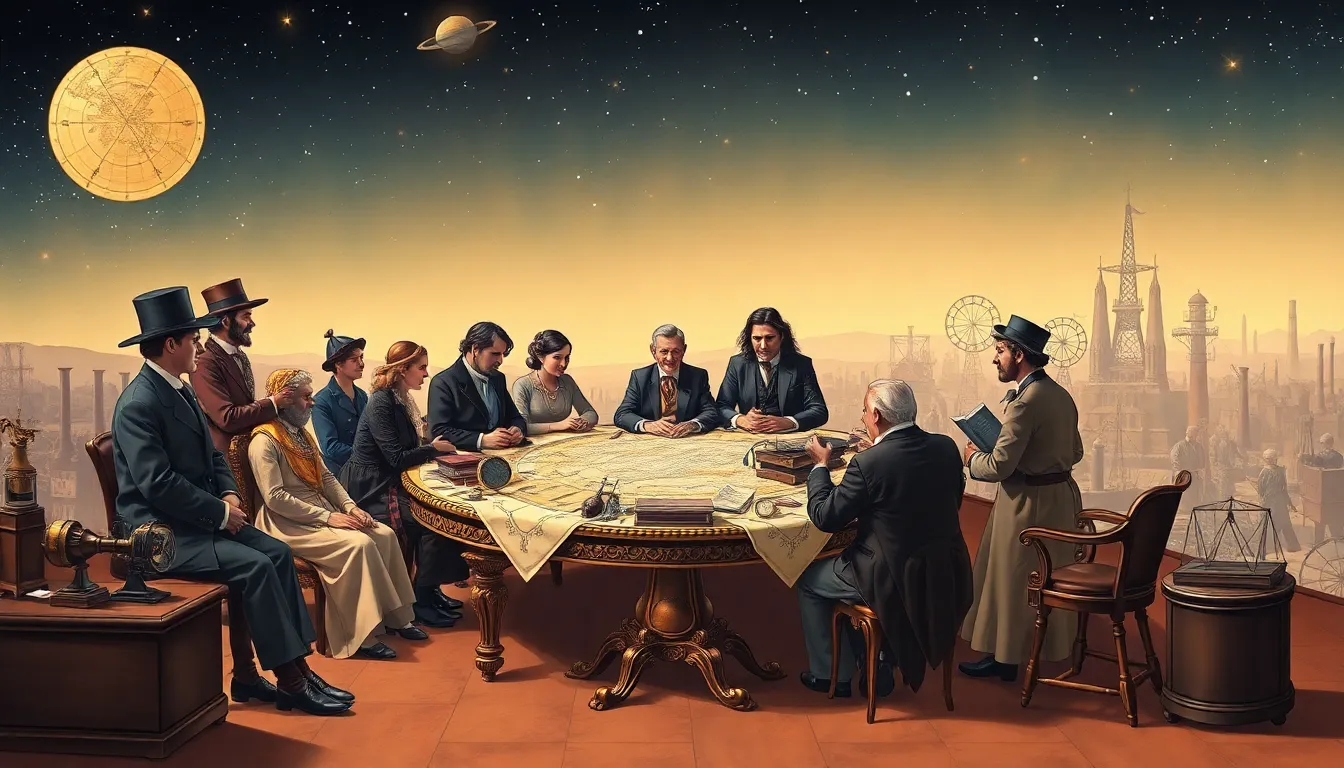
Throughout history, humans have sought to predict what the future holds. This curiosity isn’t new: even ancient cultures looked to the stars or consulted oracles for insights. From Nostradamus foreseeing great upheavals to the ancient Greeks mapping out the cosmos, the concept of predicting the future has always been a part of human culture.
In the 19th and early 20th centuries, advancements in technology and science brought about a surge in futurist thinking. People began to wonder not only what would happen next but how technology would change day-to-day living. In many ways, these past predictions reflect societal hopes and fears. Just think about it: in an age of industrial revolutions and technological breakthroughs, predicting a futuristic utopia seemed, well, almost logical.
Yet even though the many attempts, many of these predictions were more off-base than a blindfolded dart throw. Contextually rooted in the realities of their times, they captured the zeitgeist but eventually lacked the foresight needed to predict social behaviors and advancements. So, understanding their historical backdrop provides valuable insights into how society imagines its future.
Famous Predictions and Their Creators
Let’s jump into some of the most famous predictions made throughout history and explore the minds behind them.
Technological Predictions That Came True
Take, for instance, the predictions of Thomas Edison. He boldly stated in 1932 that we would be living with absolutely no need for wires by 2000. Fast forward several decades, and while we can’t say that Edison envisioned Wi-Fi specifically, his prediction has largely materialized with wireless technology becoming a staple.
Then there’s Arthur C. Clarke, known for his visionary ideas in science fiction. He famously predicted satellites would revolutionize communication. Indeed, today they are crucial for everything from weather forecasting to GPS.
But, not all predictions stood the test of time. Many futurists failed to foresee the impact of the internet, smartphones, and social media on society and culture. Who could blame them? The pace of change is often outstripped by imagination.
Predictions That Missed The Mark
While some predictions blossomed into reality, others tanked spectacularly. Let’s explore a few of these misfires.
Cultural Reflections in Future Predictions
Consider the 1960s when futurist predictions suggested that by the year 2000, we’d have food pills instead of meals. The concept was based on the assumption that technology would result in unprecedented efficiency and convenience. While we certainly have meal replacements, the idea of food pills as a universal staple? Not quite.
Also, in 1956, a prominent article announced that in just a few decades, homes would be filled with robot helpers. Yet, here we are, still wrestling with our dishwashers. This cultural reflection reveals the disconnect between technological advancement and societal acceptance of changes. Eventually, many predictions focused too much on technology while neglecting the complexities of human behavior.
How Predictions Have Shaped Society
Predictions about the future aren’t just amusing, they have profoundly shaped society. The visions of yesterday have influenced how people have approached technological advancements and societal changes.
The Role of Science Fiction in Shaping Futures
Science fiction plays a colossal role in these predictions, providing a canvas for imagination. Authors like Isaac Asimov and Philip K. Dick have not just speculated: they’ve inspired real-world innovation. For example, the concept of automated vehicles was famously explored in fiction long before the technology became a reality. As society reads these stories, they are often spurred on to push boundaries, leading to tangible advancements.
In essence, these predictions, no matter how off-target, foster creativity. They encourage thinkers, inventors, and everyday dreamers to pursue the seemingly impossible, nudging humanity ever forward.