Imagine a world where flying cars zoom past your window and robots serve you breakfast in bed. Sounds like a scene from a sci-fi blockbuster, right? But believe it or not, these ideas were once predictions about our future. As fascinating as it is to look back at what people thought the future would hold, it’s even more amusing to see how wildly off the mark they were. So buckle up as we take a humorous yet insightful journey through the past predictions of the future, exploring the visionaries, the sci-fi influence, and the lessons learned along the way.
Early Visionaries and Their Predictions
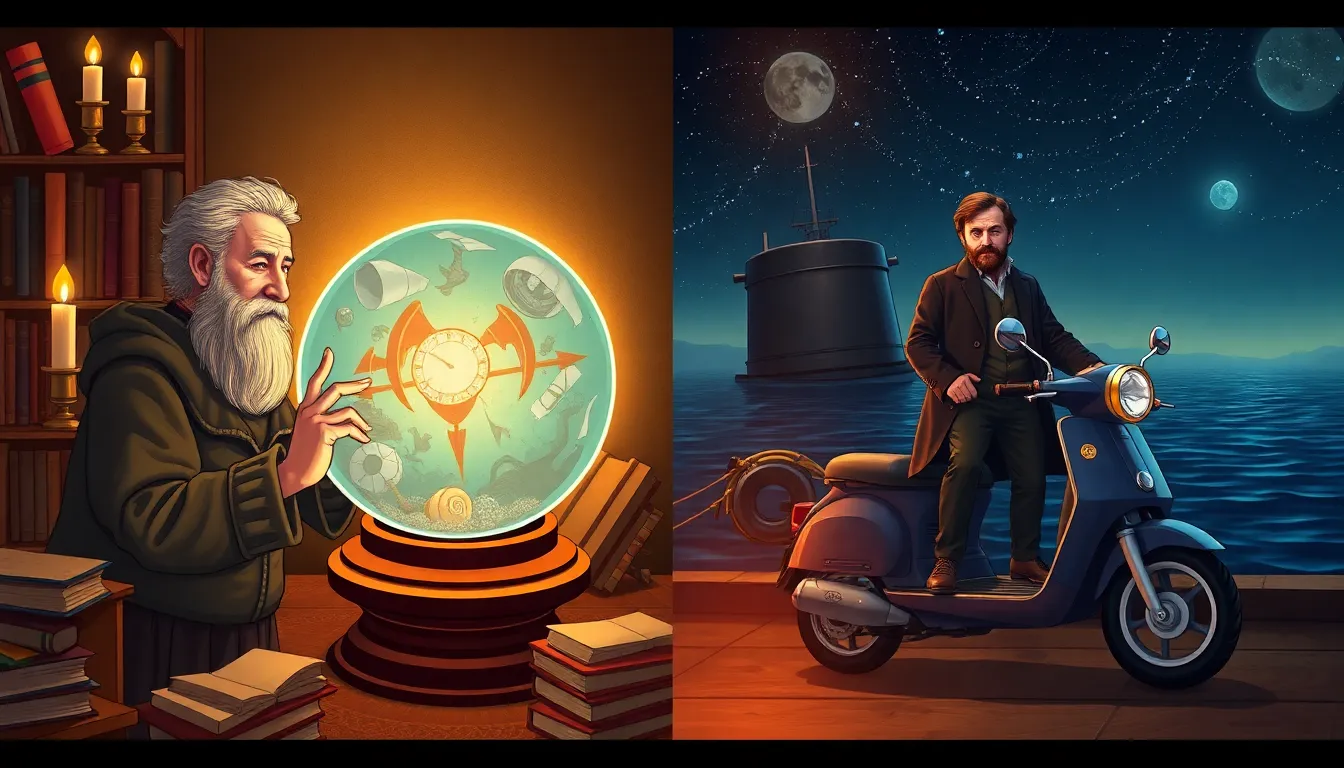
From Nostradamus to Jules Verne, early visionaries had some intriguing, if not entirely accurate, insights about what the future might hold. Nostradamus, often revered as a prophetic genius, famously predicted events ranging from natural disasters to political upheavals. One might wonder if he ever foresaw a global shortage of toilet paper or the Great Banana Peel Crisis of 2023.
Jules Verne, on the other hand, penned imaginative tales like “From the Earth to the Moon” and “Twenty Thousand Leagues Under the Sea.” He couldn’t have guessed that we would be commuting in electric scooters instead of submarines. Yet, some of his predictions about space travel and undersea exploration laid a foundation for modern scientific advancements.
Also, thinkers like H.G. Wells envisioned time machines and world wars, often pushing the boundaries of what was conceivable during their time. Their foresight sparked curiosity and discussions about what technology and society might look like, shaping the way we think about the future even today.
The Role of Science Fiction in Shaping Future Expectations
Science fiction has always been a playground for imagination, vividly painting potential futures that often border on fantastical. Think about “Star Trek”, not only did it introduce us to the concept of a mobile phone well before they existed, but it also inspired real-life innovations like tablet computers and video calls.
Authors like Isaac Asimov and Philip K. Dick challenged readers to contemplate artificial intelligence, robotics, and even alternate realities. These narratives didn’t just entertain: they planted seeds of what developments we could expect in the future. While flying cars might still be on the wish list, concepts like virtual reality, self-driving cars, and AI assistants have made significant headway, much to the inspiration of these literary pioneers.
Yet with great imagination comes great responsibility. As science fiction projects its visions, it must balance optimism with caution. Writers often warn of the dangers of unchecked technological advancement, a theme still relevant in today’s discussions about privacy and autonomy.
Technological Predictions and Their Realities
Let’s jump into how some technological predictions turned out. In the early 20th century, there were lofty expectations that we would achieve nuclear-powered cars and colony settlements on Mars by now. While we haven’t seen those specific futuristic vehicles, electric cars are all the rage, who could’ve imagined that?
On the flip side, the infamous “paperless office” was touted in the late 20th century as an imminent shift. Fast forward a couple of decades, and the role of paper has merely transformed. Even though digital advancements, offices still require heaps of paper for contracts, reports, and even the odd love letter.
The prediction of technology making our lives simpler has often clashed with the reality of constant updates, alerts, and complicated gadgets. While technology has undoubtedly evolved at breakneck speed, it seems to have entangled us in a web of complexity rather than simplifying our interactions.
Cultural and Social Predictions Through the Years
Cultural predictions hold a mirror to society, reflecting hopes, fears, and transformations. From the 1960s’ predictions of a racially integrated future, which still has its own hurdles today, to the 1980s’ anticipation of a more globalized world, observers have regularly attempted to forecast social changes.
But, many predictions about the future of work and leisure often turned out to be a mixed bag. Predictions of a four-day workweek and increased leisure time have not universally materialized. Instead, the modern age has ushered in a hustle culture often glorifying being perpetually busy.
There was also optimism about the empowerment of women and minorities in positions of power. While progress has been made, the journey is far from complete, showcasing the ongoing need for societal evolution.
Cultural predictions remind us of the fluid nature of society and how closely intertwined they are with technology, politics, and human behavior.
Lessons Learned from Historical Predictions
Reflecting on the predictions of the past invites several valuable lessons. First, they remind us of the importance of humility in forecasting. Nostradamus may have conjured images of the future, but time has shown that change is often unpredictable. Secondly, predictions often reveal more about the hopes and fears of a particular era than anything else. Today’s expectations reflect not just what is possible but also what is desired.
Also, while some predictions missed the mark, others paved the way for innovation by inspiring scientific research and technological development. As society evolves, so too does our understanding of what the future can hold, reinforcing that there is always room for improvement as well as change.
The Future of Predictions: What Lies Ahead?
So, what does the future hold for predictions? As technology continues to advance, people could expect more accurate forecasts based on data analysis and machine learning. Although navigating these waters comes with its own challenges, from privacy concerns to the ethics of AI.
Interestingly, the role of public engagement in making predictions is also growing. Crowdsourcing ideas for future possibilities can lead to a more inclusive approach. After all, technological advancements should reflect the diverse tapestry of society.
Anticipating what’s on the horizon, it’s evident that the next few decades could revolutionize how humanity interacts with technology, culture, and each other.